Maya and Haudenosaunee Ancestral Knowledge Exchange
by Sabina Sosof Ajcot
Dear Community, we are pleased to share with you this new edition of our newsletter. We deeply appreciate your interest and ongoing support.
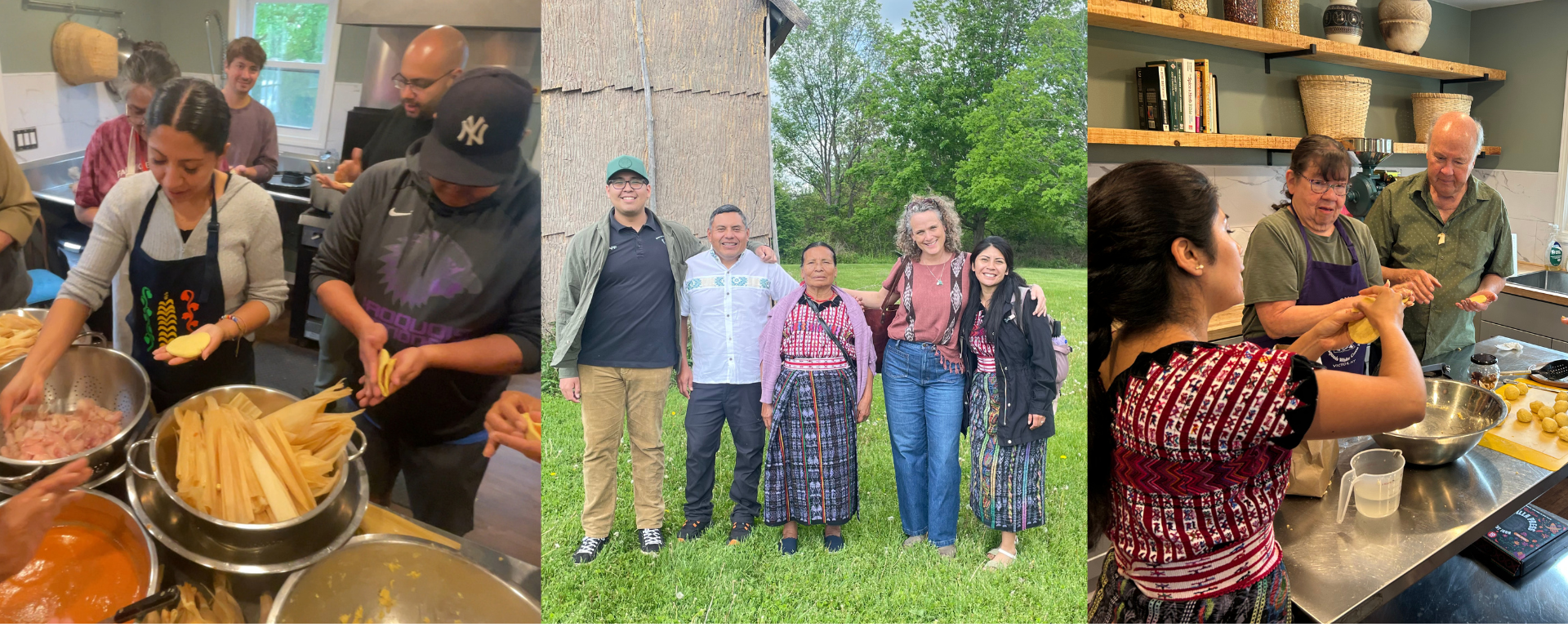
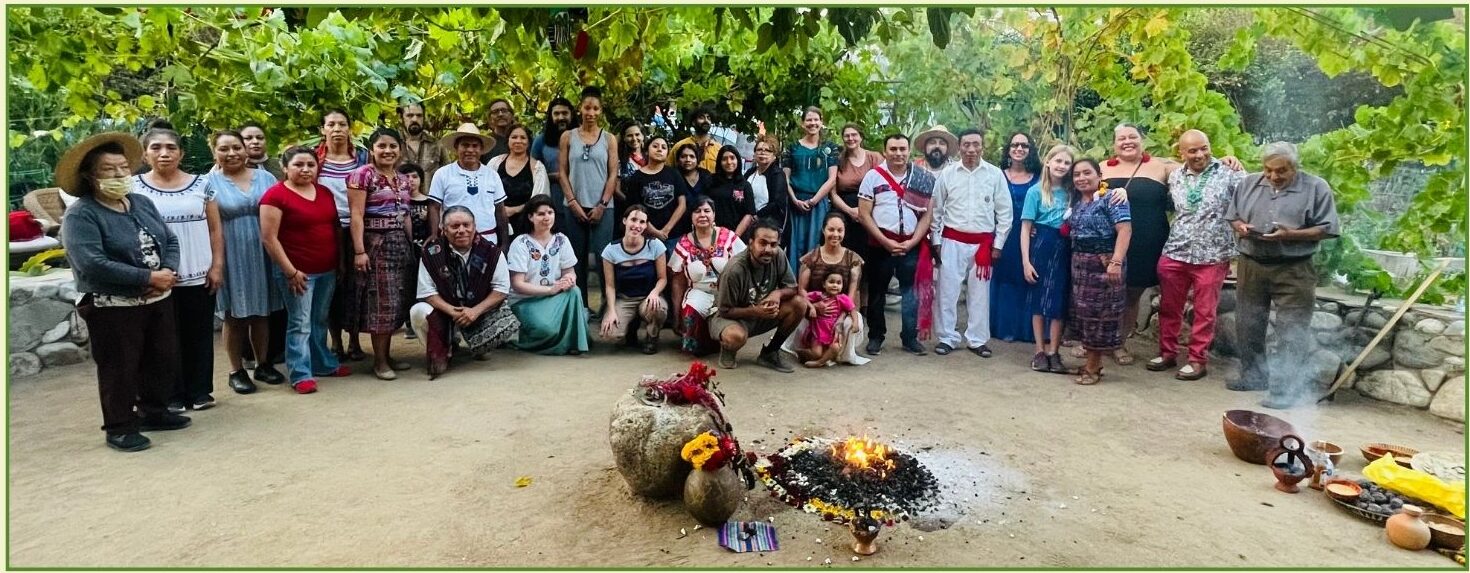
In May 2025, we experienced a profoundly inspiring moment: a cultural and ancestral knowledge exchange centered around native cuisine, between the Kaqchikel Maya people of Guatemala and community members of the Haudenosaunee Confederacy in upstate New York.
It was an honor to take part in this gathering alongside my mother, my brother, and Rebecca. As a Kaqchikel family, we shared our roots, culinary knowledge, and living traditions with the caretakers of the White Corn Project, a sacred effort that, like our own practices, honors the seed, the land, and the memory of our peoples.
This space of mutual learning and connection reaffirmed the strength of the bonds between Indigenous nations, who despite being separated by geographic borders share a legacy of resilience, spirituality, and deep love for Mother Earth.
Kaqchikel Maya people of Guatemala and community members from the Haudenosaunee Confederacy in upstate New York
Presenting my Mother’s Work
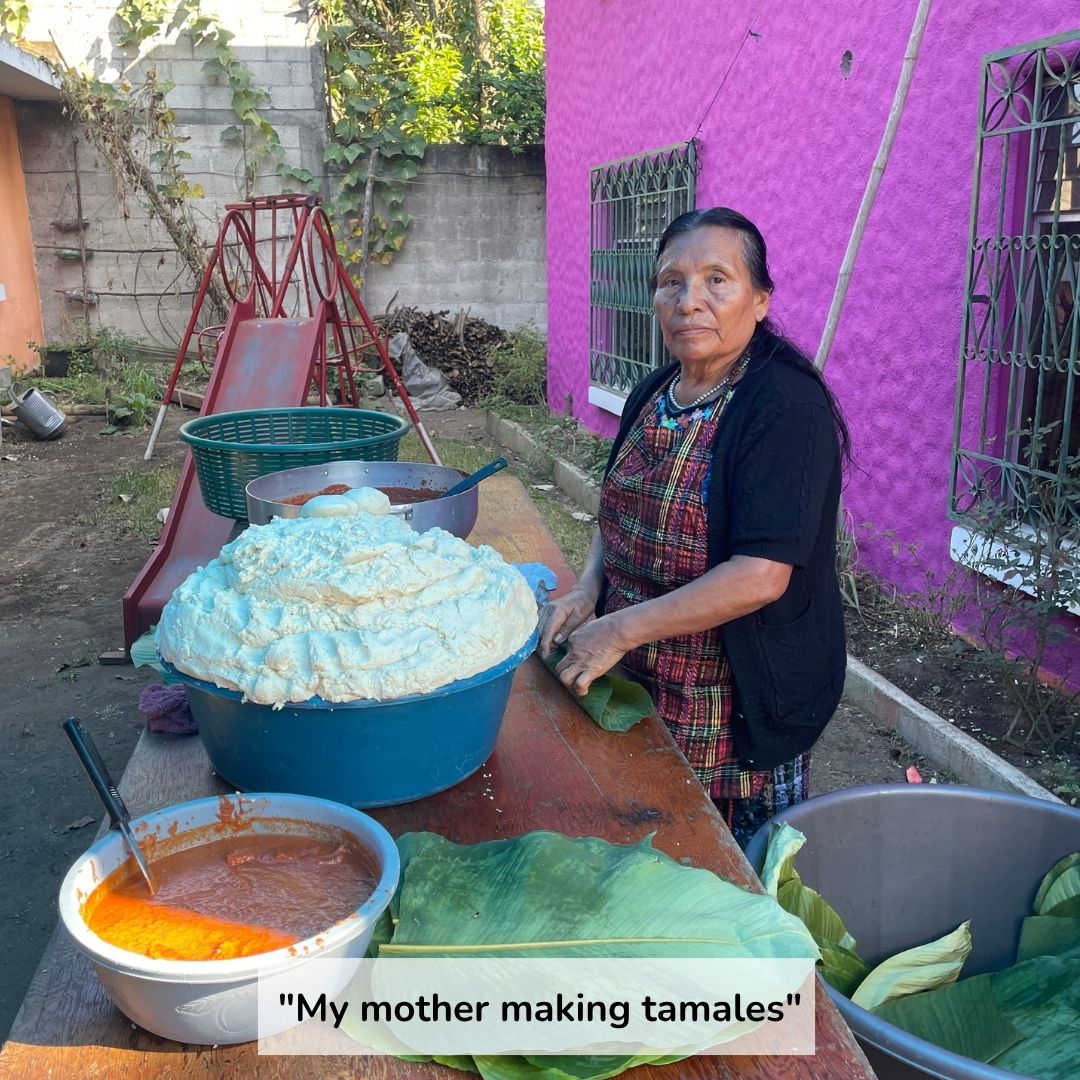
As the daughter of a Maya woman, I feel incredibly fortunate to have been raised by a strong and courageous mother. She raised the four of us on her own after being widowed when my siblings were very young. Now 75 years old, she has spent her entire life working in kitchens and over the years became an expert cook, mastering both traditional Guatemalan dishes and recipes she learned during her time in the United States, including delicious desserts.
She always says “this food is finger-licking good,” and it’s true! People are always amazed by the flavor she brings to every meal.
My mother is a survivor of Guatemala’s 30-year internal armed conflict. During this time, her husband disappeared and remains missing to this day. As the daughter of a family of 13 children, she began working at age 13 out of economic necessity.
She cooked at a Christian mission, preparing meals daily for 50, 100, and sometimes over 150 people, leading the women’s kitchen team for many years until her retirement. Many of her specialties include tamales, tamalitos, chuchitos, and pepián, among other Guatemalan dishes. She also learned many U.S.-based recipes during her visits to the states.
These journeys included helping her three children escape the war in Guatemala and aiding others to safely escape as well. My mother risked her own life, and that of her children, to help others during the conflict.
Grandmother and Her Recipes of Resistance
Today, my mother is not only a mother but also a grandmother and great-grandmother. It fills me with pride to see that beyond sharing stories of survival, we are also preserving something deeply sacred: our traditional recipes made from corn, a living seed that has nourished the peoples of the Americas for generations.
Corn is more than food. It is identity, spirituality, and memory. Our elders have told us how, during the armed conflict, seeds were burned along with the land, the crops, the homes… and the lives of many in our indigenous communities.
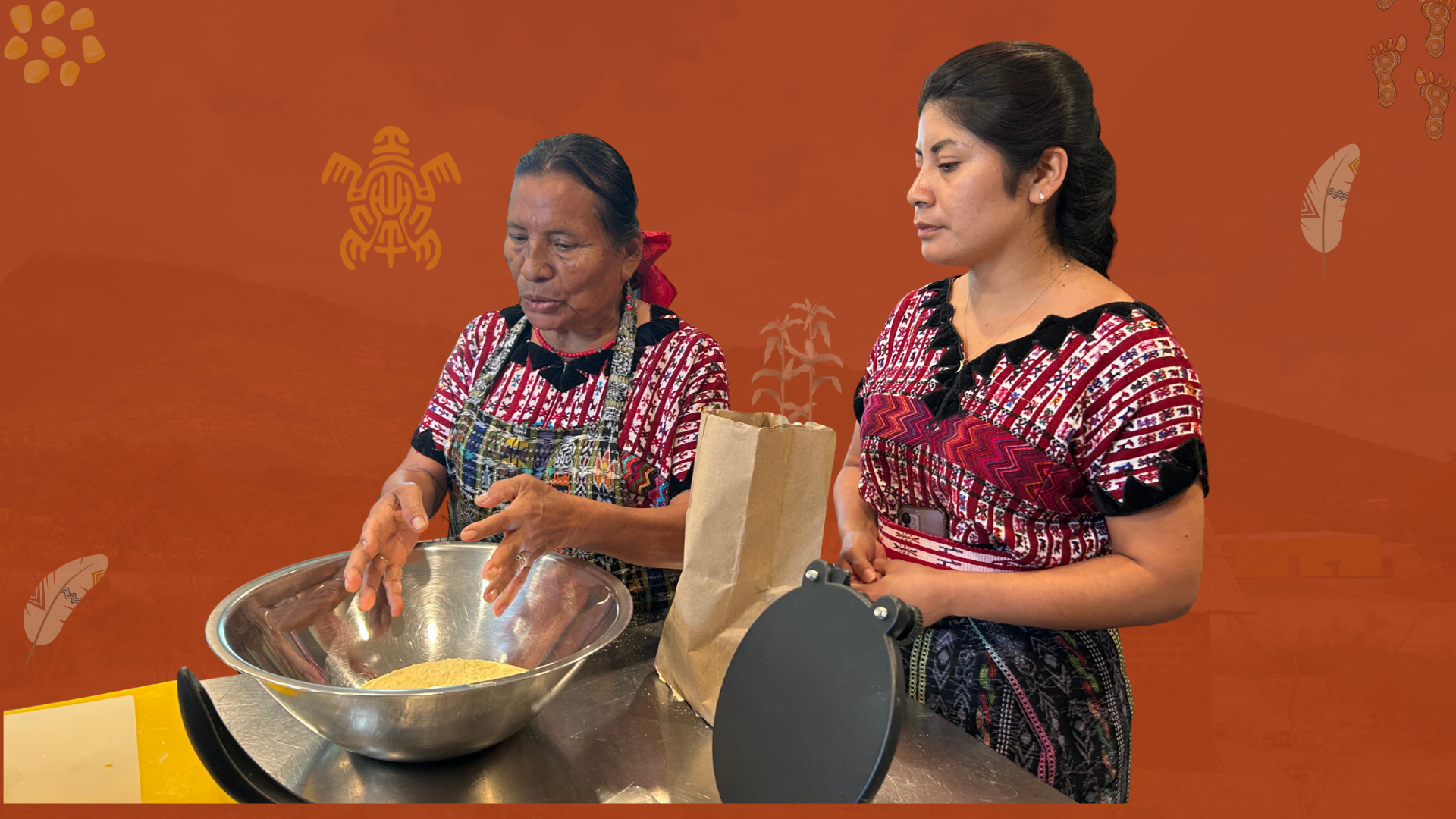
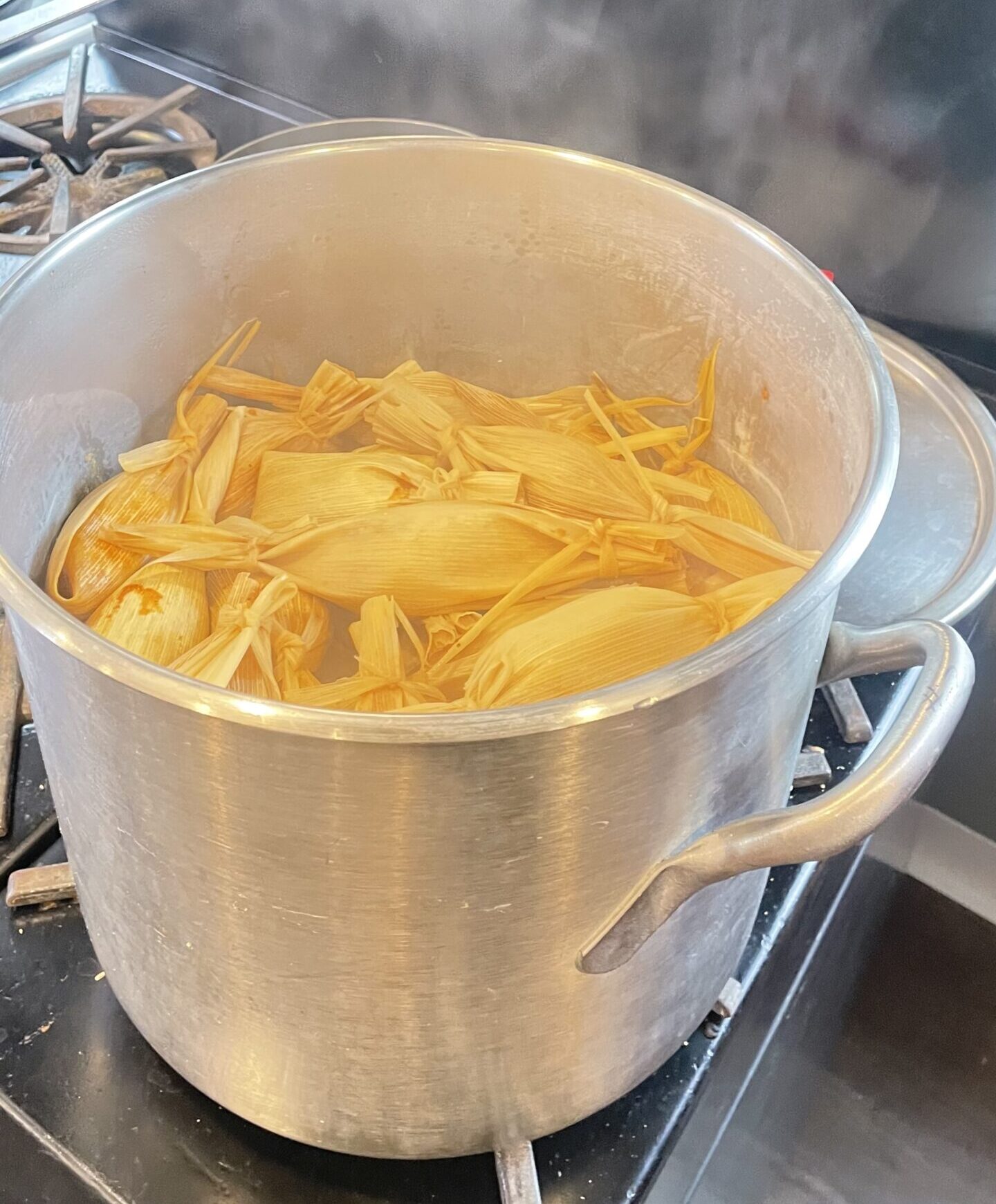
With permission and respect from Haudenosaunee Community Members, we offered a cooking workshop where we shared the ancestral process of nixtamalization, as well as recipes for tortillas, tamalitos, and chuchitos. This process of cooking corn with lime is essential: it unlocks the full nutritional value of corn, allowing the body to absorb its nutrients. Without it, the sacred power of corn is diminished.
Sharing this knowledge with our Seneca relatives was deeply meaningful. We cooked, learned, and felt the weight and strength of our shared histories.
My mother, a wise 75 year old woman and my brother a 40 year old man reflected that we, as Indigenous peoples, are not alone in our resistance. The stories repeat themselves: land dispossession, discrimination, loss of identity, language, traditional dress… and now, the erosion of our traditional foods.
Our experience at The White Corn Project was filled with empathy. Both communities carry similar wounds, but also a dignity that has not been erased. As my mother said with emotion:
“The Indigenous Peoples of the North also eat and honor corn. Without corn, we cannot live.”
As a daughter, I am grateful for life. Every day, I learn from my mother and also from the school without walls: our Indigenous communities. In these spaces, we learn about history, colonization, and ancestral culture not from books, but from lived experience.
I realize that if we children, grandchildren, and younger generations don’t actively engage in spaces that connect us to our culture, that remind us of who we are and where we come from, we risk forgetting our identity.
That’s why it’s urgent to weave connections and unite our efforts to keep our culture alive. A culture often called “alternative” today, but one that truly offers a more humane and sustainable way of life.
We must remember: we already have what we need to live traditional medicine. We have our native foods, eco-friendly building techniques, community values, and a deep respect for life. What’s now being labeled as permaculture, agroecology, or organic living has been part of our ancestral practices all along. And now more than ever, we must remember to practice, and honor that legacy.
Our Stories Are Interwoven
During the exchange with Haudenosaunee community members, it became clear: our stories, though geographically distant, share common pain. Our Indigenous territories were invaded, our seeds were burned, our homes destroyed, our crops uprooted, and our families killed or disappeared.
In Guatemala’s armed conflict, many Indigenous women were raped, lands were stolen, Christian and non-Christian leaders were murdered, and babies were ripped from their mothers’ wombs even in sacred and beautiful places like the areas around majestic Lake Atitlán.
We believe it is vital to continue passing down these stories and wisdom to present and future generations. Our legacy and their quality of life depend on it.
As grandparents, parents, and keepers of ancestral memory, it is our responsibility to teach who we are, where we come from, and where we are going. Intergenerational Ancestral Skills Camp
Only then can our youth grow with a strong identity and a critical lens, not through the fog of consumerism or distractions that threaten their physical, mental, and spiritual health.
Preserving our communities, languages, traditional clothing, and native foods is not only an act of resistance it is an act of love.
In Guatemala, many Indigenous youth have been taught to be ashamed of their identity, to believe they are ignorant, that they have no worth beyond serving others, and that they can’t aspire to a dignified life.
But the truth is different. Indigenous families grow the healthiest food, use traditional medicine, preserve food with ancestral techniques, build with natural materials, and live in harmony with nature.
For us, the Maya people, quality of life is not measured in luxury, titles, or industry but in balance with Mother Earth. We use what nature gives us, responsibly and sustainably. Today’s science is only beginning to recognize what we have always known.
Our stories are similar because our struggles are similar. But so are our hopes, our resistance, and our wisdom. And for that reason, we will continue to tell our stories. Because in remembering, we resist. And in sharing, we flourish.
Globalization and Indigenous Territories
To speak of globalization is to recognize how it impacts our economies, societies, and especially our Indigenous cultures. Today, the challenges we face as humanity are vast: ecological crises, loss of identity, deteriorating health, and spiritual disconnection. These burdens weigh heaviest on Indigenous peoples, whose ways of life are rooted in harmony with the Earth.
We know we cannot change the world overnight. But we can start with small daily acts that plant seeds of transformation: preserving our traditional recipes, honoring ancestral cooking techniques, rejecting processed foods, and passing this knowledge from mothers to children, from grandparents to grandchildren.
Food is not just physical nourishment it feeds the spirit. Preparing our meals with intention, asking for permission and giving thanks to the Creator for each seed and ingredient, connects us to the heart of the Earth and our ancestors.
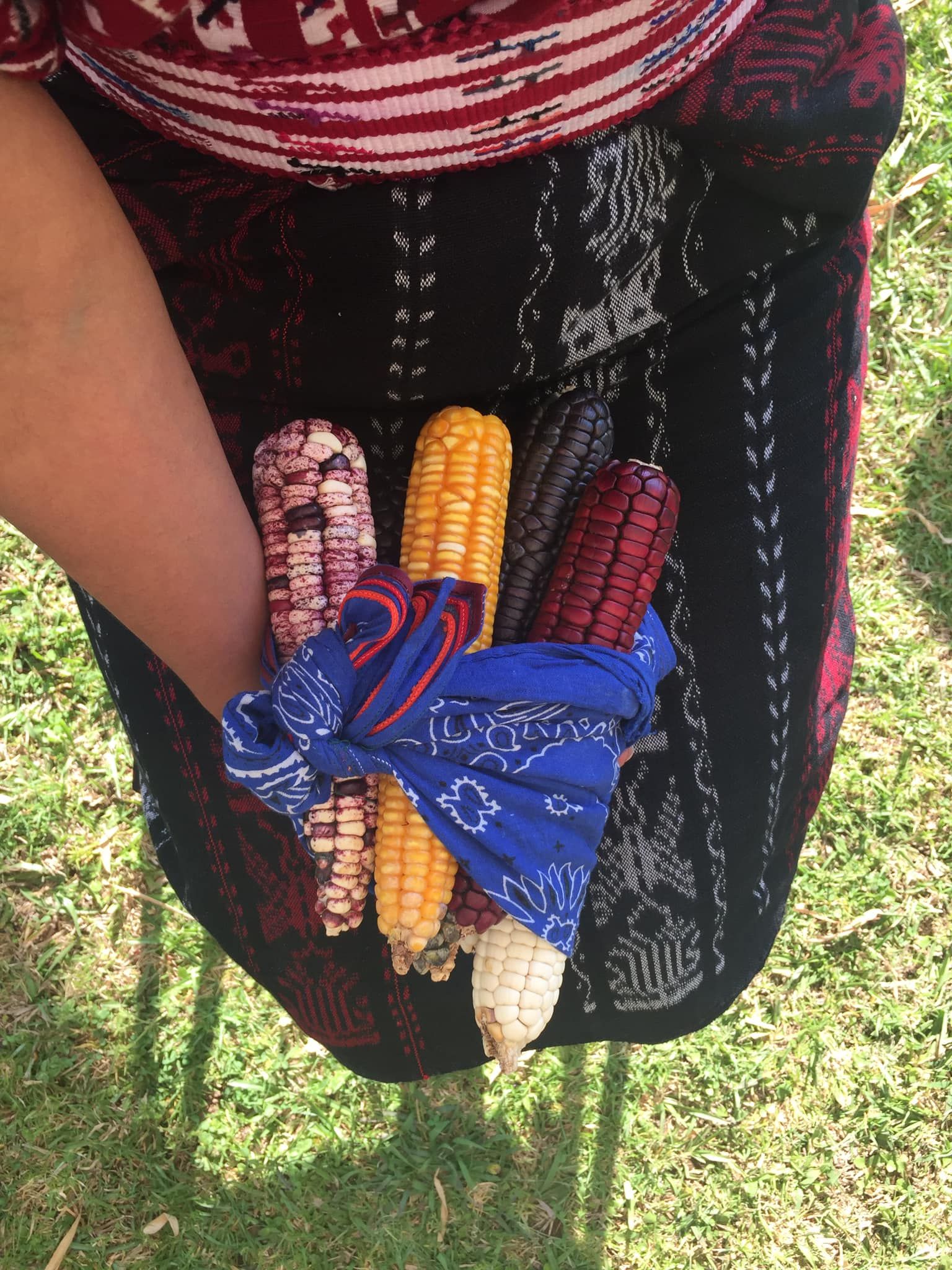
To the colonizers, gold was shiny metal. To our peoples, gold has always been corn. Yellow corn is sacred because it gives life. It is food, medicine, and a symbol of resilience. Without it, we lose more than nutrition we lose part of our collective soul.
Knowing how to eat corn is more than satisfying hunger. It’s understanding what we consume, why we consume it, and how we prepare it. Nixtamalization, for example, is not just a cooking technique it is ancestral knowledge. Knowing the origin of corn, the lime from m ountain stone that adds calcium to our bodies, honors the science and wisdom of our ancestors.
With Deep Gratitude
We extend our heartfelt thanks to The Garden’s Edge and its generous donors for making this exchange and learning experience possible. We shared and recognized cultural similarities that strengthen our identities: the sacredness of corn as the foundation of life, a respectful and humble worldview, and the understanding that everything around us from the smallest to the vastest is alive and deserving of care.
As my mother said:
“Without corn, we die.”
And truly, to care for corn is to care for life itself.
Because in the end, we are not owners of nature we are part of it.
And remembering that is our greatest wisdom.
Help Us Plant a More Just and
Sustainable Future
Did you know that millions of farming families feed the world… yet many lack access to clean water, fair seeds, and the tools needed to work their land and preserve their culture?
The Garden’s Edge works hand-in-hand with rural communities to strengthen sustainable agriculture, protect ancestral knowledge, and care for the Earth that feeds us all.With your donation, you support:
- The preservation of ancestral knowledge
- The protection of native seeds
- The right of communities to live with dignity and food sovereignty
Because every seed matters.
Every act of solidarity helps grow a greener, fairer, more humane future.
Donate today. Help us care for the Earth and everything that lives upon it.